Repeated pauses in breathing during sleep caused by the brain failing to signal the body to breathe, not by a blocked airway.
 Medically reviewed by
Dr. Mihaela G.
Medically reviewed by
Dr. Mihaela G.
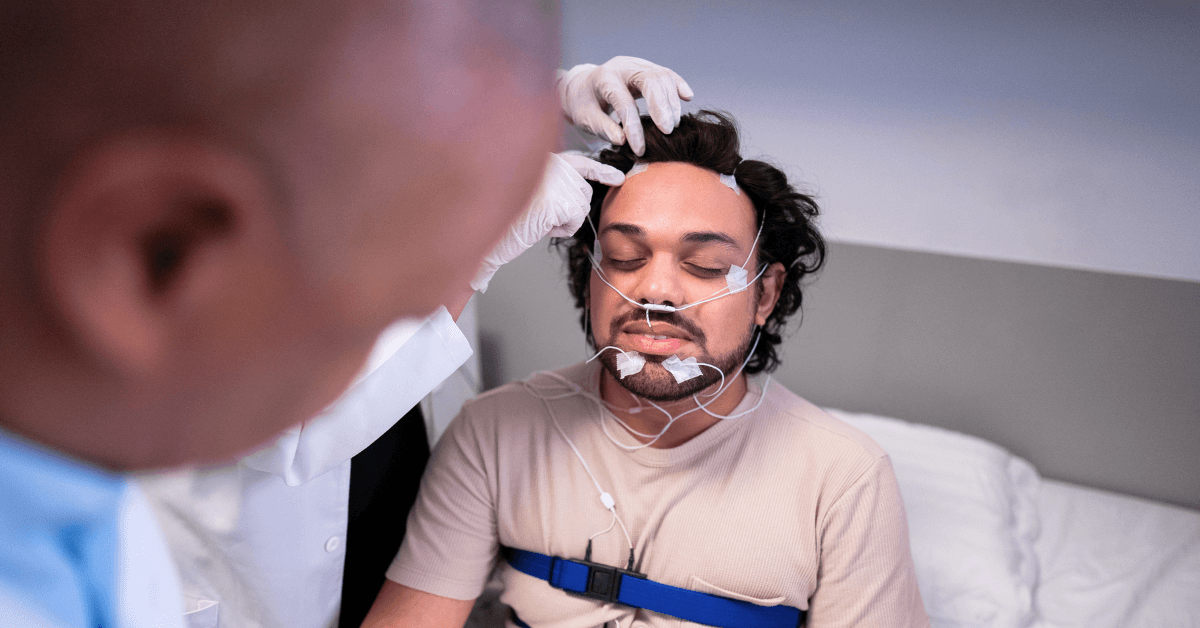
Central Sleep Apnea involves repeated pauses in breathing during sleep, but unlike its more common counterpart, obstructive sleep apnea, the airway itself isn’t blocked. Instead, the brain temporarily stops sending the signal to breathe, so the chest and diaphragm simply stop trying, briefly, before breathing resumes. This is a meaningful distinction, since it points to a problem in the body’s respiratory control system rather than a mechanical obstruction in the throat.
This condition is considerably less common than obstructive sleep apnea on its own, and is frequently connected to an underlying medical condition, most often heart failure, or to certain medications, particularly opioids, which can directly suppress the brain’s breathing drive. It’s less often a standalone, primary condition and more often a signal pointing toward something else that needs medical attention.
One specific and well-recognized pattern within central sleep apnea is Cheyne-Stokes breathing, a distinctive cycle of breathing that gradually waxes and wanes in depth, building up, fading out, then pausing entirely before the cycle restarts, most commonly seen in people with significant heart failure.
Breathing pauses without obstruction
Repeated episodes where breathing stops or significantly decreases, not because of a blocked airway, but because the brain’s signal to breathe has temporarily stopped, often without the loud snoring typically associated with obstructive sleep apnea.
Cheyne-Stokes breathing pattern
A specific, recognizable pattern involving gradually increasing then decreasing breath depth, followed by a pause, then restarting, cycling repeatedly through the night, especially common in central sleep apnea connected to heart failure.
Disrupted, fragmented sleep
Frequent awakenings, sometimes with a sense of breathlessness or gasping, contributing to poor sleep quality, even though the underlying mechanism differs from the airway-based fragmentation seen in obstructive sleep apnea.
Excessive daytime sleepiness
Significant daytime fatigue, similar to other sleep-disordered breathing conditions, reflecting the cumulative impact of fragmented, poor-quality nighttime sleep.
Connection to underlying conditions
Symptoms often appear or worsen alongside known heart failure, recent opioid medication use, or, less commonly, other neurological conditions affecting the brainstem’s breathing control centers.
⋅ Anxiety connected to episodes of breathlessness or gasping during sleep
⋅ Frustration at persistent daytime fatigue despite spending adequate time in bed
⋅ Worry connected to an underlying medical condition, such as heart failure
⋅ Irritability connected to chronic, fragmented sleep
⋅ Difficulty concentrating during the day due to fragmented nighttime sleep
⋅ Limited awareness of the breathing pauses themselves during sleep
⋅ Memory difficulties connected to chronic sleep disruption
⋅ Slowed thinking, particularly noticeable in the morning
⋅ Repeated pauses in breathing during sleep without airway obstruction
⋅ A cyclical pattern of breathing that gradually deepens, fades, and pauses (Cheyne-Stokes breathing)
⋅ Excessive daytime sleepiness and fatigue
⋅ Awakening with a sense of breathlessness, though typically without the gasping or choking seen in obstructive sleep apnea
⋅ Frequent nighttime awakenings connected to breathing irregularities
⋅ Reduced daytime alertness affecting work or daily activities
⋅ In some cases, increased reliance on naps to compensate for poor nighttime sleep
⋅ Symptoms that fluctuate alongside the status of an underlying medical condition, such as heart failure
Central Sleep Apnea affects approximately 0.9% of the general adult population, making it considerably less common than obstructive sleep apnea, but rates climb substantially in specific populations. Among people with significant heart failure, prevalence has been documented as high as 30-50% in some studies, reflecting how closely this condition is tied to underlying cardiac function in many cases.
Opioid medication use is another major contributing factor, since these medications can directly suppress the brainstem’s respiratory drive, and central sleep apnea is a recognized risk for people on long-term opioid therapy, particularly at higher doses.
The condition is more common in men and in older adults, broadly mirroring some of the demographic patterns seen in obstructive sleep apnea, though the underlying mechanism and primary risk factors differ considerably between the two.
Comorbidity with heart failure, atrial fibrillation, stroke, and chronic opioid use is substantial, and in many cases, central sleep apnea is best understood as a downstream consequence of one of these underlying conditions rather than a standalone primary disorder, which has direct implications for how it’s evaluated and treated.
Central Sleep Apnea results from a disruption in the brain’s regulation of breathing, rather than a physical obstruction, with several distinct underlying mechanisms depending on the specific cause.
Heart failure is among the most common and well-documented underlying causes, particularly connected to the Cheyne-Stokes breathing pattern. In heart failure, delayed and altered circulation affects how quickly the brain detects changes in blood carbon dioxide levels, leading to an unstable feedback loop where breathing overcorrects, then undercorrects, producing the characteristic waxing and waning pattern, with breathing pauses occurring at the lowest point of this cycle.
Opioid medications directly suppress the brainstem’s respiratory control centers, reducing or eliminating the drive to breathe at a certain depth or rhythm during sleep, an effect that’s dose-dependent and a recognized risk, particularly with long-term, higher-dose opioid use.
High altitude can produce a temporary, related pattern in people without any underlying disease, since reduced oxygen availability disrupts the normal breathing feedback loop, though this typically resolves with acclimatization or return to lower altitude.
Neurological conditions affecting the brainstem directly, including certain strokes or other structural issues in this region, can also produce central sleep apnea by disrupting the physical structures responsible for generating the breathing rhythm itself.
Central Sleep Apnea is diagnosed through polysomnography (an overnight sleep study), which can distinguish central apnea events, characterized by an absence of effort to breathe, from obstructive events, where breathing effort continues despite a blocked airway. The specific pattern of breathing, including assessment for Cheyne-Stokes breathing, and the frequency of central apnea events per hour of sleep, inform both diagnosis and severity assessment.
Given how often central sleep apnea connects to an underlying condition, diagnosis typically involves broader medical evaluation, including assessment of cardiac function, particularly when heart failure is suspected, and a careful review of current medications, particularly opioid use.
Differential diagnosis centers on distinguishing this from obstructive sleep apnea, where the underlying mechanism, airway blockage versus absent breathing effort, differs fundamentally, even though some people experience a combination of both types, sometimes called mixed or complex sleep apnea. High-altitude periodic breathing is distinguished by its clear connection to altitude exposure and typical resolution upon return to lower elevation. A thorough cardiac and medication history helps clarify which underlying factor, if any, is driving the central apnea pattern in a given individual.
Treatment for Central Sleep Apnea generally focuses on addressing the underlying cause alongside direct treatment of the breathing pattern itself.
Treating the underlying condition
When heart failure is the underlying driver, optimizing heart failure treatment itself often produces meaningful improvement in the associated central sleep apnea, making this a primary, foundational component of treatment in these cases. When opioid medications are responsible, working with the prescribing physician to reassess dosing or consider alternatives, where clinically appropriate, is an important parallel step.
Positive airway pressure therapy
CPAP, similar to its use in obstructive sleep apnea, can help some people with central sleep apnea, though response is more variable than in the obstructive form, given the different underlying mechanism. Adaptive servo-ventilation (ASV), a more sophisticated device that adjusts pressure support dynamically based on the person’s breathing pattern, has shown particular promise for central sleep apnea connected to heart failure, though its use requires careful clinical judgment given some complex safety considerations identified in research with certain heart failure populations.
Supplemental oxygen
In some cases, particularly connected to heart failure, supplemental oxygen during sleep can help stabilize the breathing pattern and reduce the frequency of central apnea events.
Medication adjustments
Certain medications can help stabilize the breathing drive in some cases, though this is generally considered alongside, rather than instead of, addressing the primary underlying cause.
Make sure any underlying heart condition is being actively, optimally managed. Since central sleep apnea connected to heart failure often improves alongside better cardiac management, staying engaged with your cardiology care is one of the most directly relevant things you can do.
If you’re on long-term opioid therapy, raise sleep symptoms directly with your prescribing physician. This connection isn’t always obvious, and bringing it up explicitly can lead to a meaningful conversation about dosing or alternatives, where clinically appropriate.
Follow through with the recommended sleep study and any follow-up evaluation. Given how often central sleep apnea points toward an underlying condition, getting a clear, accurate diagnosis matters considerably for guiding the right next steps.
Be patient with treatment, since response can take time, particularly when tied to managing a chronic condition like heart failure. Improvement in the sleep apnea often tracks alongside improvement in the underlying condition, rather than resolving immediately on its own.
Keep your healthcare team coordinated. Given the connection to cardiac health and medication use, central sleep apnea often benefits from communication between your sleep specialist, cardiologist, and any prescribing physician, rather than being managed in isolation by just one provider.
The prognosis for Central Sleep Apnea depends considerably on the underlying cause and how well it can be addressed. When connected to heart failure, improvement in cardiac function and treatment often leads to meaningful improvement in the breathing pattern as well, making the management of the underlying condition central to the overall outlook.
When connected to opioid use, adjustments to medication, where clinically appropriate and safe, can substantially improve or resolve the central sleep apnea, though this requires careful coordination with the prescribing physician given the need to balance pain or other treatment goals.
Without addressing the underlying cause, central sleep apnea can persist and may contribute to additional strain on cardiovascular health, particularly in the context of existing heart failure, underscoring why this condition is taken seriously as both a sleep concern and a broader marker of underlying health status.
With appropriate, coordinated treatment, addressing both the underlying condition and the breathing pattern directly, many people experience meaningful improvement in both sleep quality and daytime functioning.
Seek evaluation if you, or someone close to you, notice breathing pauses during sleep without the loud snoring typically associated with obstructive sleep apnea, particularly if you have a known heart condition or are taking opioid medications.
Seek prompt evaluation if you have heart failure and are experiencing significant daytime fatigue or disrupted sleep, since central sleep apnea is common in this population and addressing it can be an important part of your overall cardiac care.
If you’re on long-term opioid therapy and experiencing unusual breathing patterns or excessive daytime sleepiness, raise this directly with your prescribing physician, since this is a recognized and important connection worth evaluating.
Someone in your life might be quietly looking for this. Share it:
These conditions share overlapping symptoms and are often misdiagnosed.
In obstructive sleep apnea, the airway becomes physically blocked during sleep, even though the brain continues sending the signal to breathe, and the person continues trying to breathe against the obstruction. In central sleep apnea, there’s no blockage; instead, the brain temporarily stops sending the signal to breathe at all, so breathing effort itself pauses. This is why central sleep apnea typically doesn’t involve the loud snoring and gasping characteristic of the obstructive form, and why it’s evaluated and treated quite differently.
In heart failure, delayed circulation affects how quickly the brain detects changes in blood carbon dioxide levels during sleep, creating an unstable feedback loop in the breathing control system. This produces a distinctive pattern called Cheyne-Stokes breathing, where breathing depth gradually increases, then decreases, then pauses entirely before the cycle restarts. This connection is well-documented and is part of why central sleep apnea evaluation often includes a thorough assessment of cardiac function.
Yes, opioid medications are a well-recognized cause. These medications directly suppress the brainstem’s respiratory control centers, which can reduce or eliminate the normal drive to breathe during sleep, particularly at higher doses or with long-term use. If you’re on long-term opioid therapy and experiencing unusual breathing patterns or excessive sleepiness, this connection is worth raising directly with your prescribing physician.
Treatment generally focuses on addressing the underlying cause alongside the breathing pattern itself. When heart failure is the driver, optimizing heart failure treatment often improves the associated sleep apnea. When opioids are responsible, working with the prescribing physician on potential dosing adjustments is an important step. Positive airway pressure therapies, including CPAP and, in some cases, a more specialized device called adaptive servo-ventilation, can also help, though response varies more than in obstructive sleep apnea given the different underlying mechanism.
Donovan, L. M., & Kapur, V. K. (2016). Prevalence and characteristics of central compared to obstructive sleep apnea: analyses from the Sleep Heart Health Study cohort. Sleep, 39(7), 1353–1359. PubMed
Naughton, M. T. (2012). Cheyne-Stokes respiration: friend or foe? Thorax, 67(4), 357–360. PubMed
Cowie, M. R., Woehrle, H., Wegscheider, K., Angermann, C., d’Ortho, M. P., Erdmann, E., Levy, P., Simonds, A. K., Somers, V. K., Zannad, F., & Teschler, H. (2015). Adaptive servo-ventilation for central sleep apnea in systolic heart failure. New England Journal of Medicine, 373(12), 1095–1105. PubMed
Mogri, M., Khan, M. I., Grant, B. J., & Mador, M. J. (2008). Central sleep apnea induced by opioids. Chest, 133(6), 1484–1487. PubMed
Eckert, D. J., Jordan, A. S., Merchia, P., & Malhotra, A. (2007). Central sleep apnea: pathophysiology and treatment. Chest, 131(2), 595–607. PubMed