Recurrent picking at one's own skin resulting in lesions and tissue damage — despite genuine and repeated attempts to stop the behavior.
 Medically reviewed by
Dr. Mihaela G.
Medically reviewed by
Dr. Mihaela G.
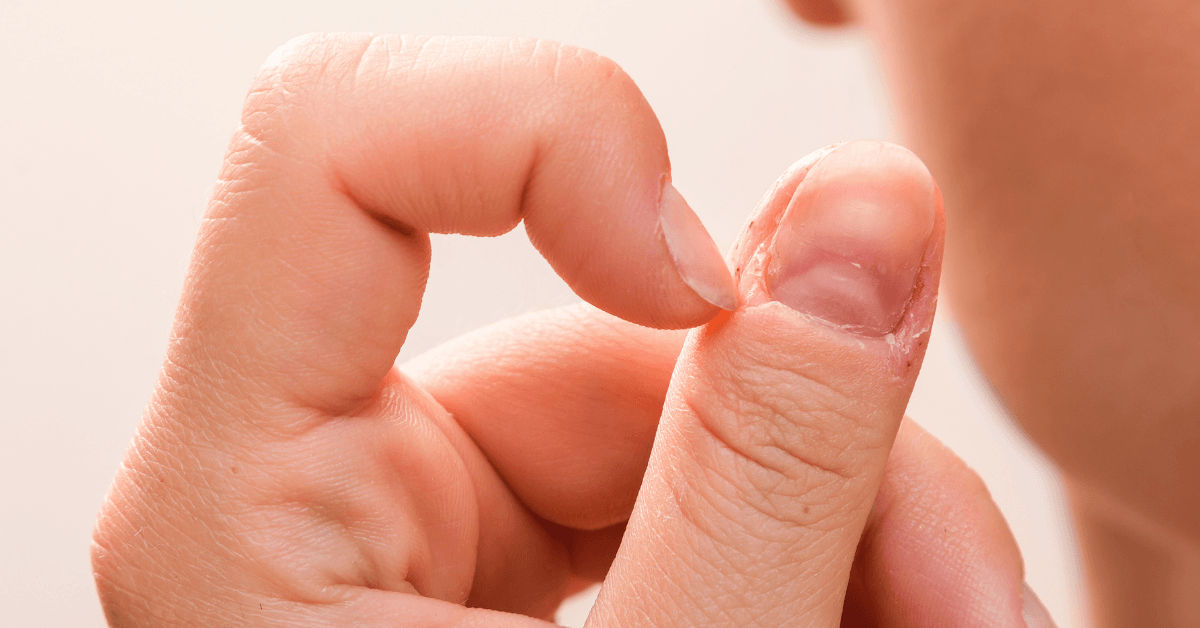
Excoriation Disorder — commonly known as skin-picking disorder or by its older clinical term, dermatillomania — is defined by recurrent picking at one’s own skin, resulting in skin lesions, accompanied by repeated attempts to decrease or stop the behavior. The face is the most frequently targeted site, though arms, hands, scalp, and other accessible body areas are commonly involved, and picking may target multiple sites simultaneously or in sequence. As with trichotillomania, this is a condition the person genuinely wants to stop and tries repeatedly to control — not a habit maintained through indifference or lack of effort.
Excoriation disorder shares the same two-style pattern documented in trichotillomania and the broader category of body-focused repetitive behaviors (BFRBs). Automatic picking occurs largely outside conscious awareness, frequently during sedentary or passive activities, with the person often not registering the behavior until the resulting damage becomes apparent. Focused picking is preceded by a recognizable urge or tension, often triggered by the sight or feel of a specific skin irregularity — a pimple, scab, rough patch, or perceived blemish — and followed by a sense of relief or satisfaction once the area has been picked, examined, or smoothed. Most individuals exhibit both styles, with the balance shifting depending on context, stress level, and mood state.
A defining clinical feature is the specific triggering role of minor skin irregularities. Unlike trichotillomania, where the target (hair) is relatively uniform, excoriation disorder frequently begins with picking directed at a genuine, if minor, skin imperfection — acne, a scab, dry skin, an ingrown hair — that becomes the focus of escalating attention and manipulation. The picking itself, rather than resolving the irregularity, typically creates new lesions and perpetuates the cycle: picking produces a wound, the healing wound becomes a new target, and the cycle continues indefinitely at the same or new sites.
Excoriation disorder belongs to the DSM-5-TR chapter of Obsessive-Compulsive and Related Disorders, grouped with trichotillomania under the broader body-focused repetitive behavior category. The two conditions share substantial phenomenological overlap — comparable urge-tension-relief cycles, similar automatic and focused subtypes, similar treatment approaches — and frequently co-occur in the same individual, sometimes alternating in prominence over time.
As with trichotillomania, shame and concealment dominate the lived experience of excoriation disorder. Makeup, clothing choices, and avoidance of situations with direct lighting or close physical proximity to others are common adaptations. Many individuals delay treatment-seeking for years, often presenting first — and sometimes exclusively — to dermatologists for treatment of the resulting skin damage, without the underlying psychiatric condition ever being identified or addressed, leaving the cycle of damage and re-picking uninterrupted.
The picking behavior itself
The core symptom is recurrent picking at the skin, resulting in visible lesions, scarring, or tissue damage. The face is the most commonly targeted area, though picking frequently extends to the arms, hands, fingers (including cuticles and nail beds), scalp, back, and legs. Picking is most often directed at perceived irregularities — acne, scabs, dry or rough patches, ingrown hairs, or even normal skin texture that becomes a focus of attention — though in automatic picking, normal, undamaged skin may also be targeted without any preceding irregularity.
Automatic versus focused picking
Automatic picking occurs with minimal conscious awareness, typically during passive activities such as watching television, reading, or talking on the phone, and is frequently noticed only through its physical evidence. Focused picking is preceded by an identifiable urge or rising tension — often triggered by visually or tactilely noticing a skin irregularity — and followed by a sense of relief, satisfaction, or a feeling of having “fixed” or smoothed the area, despite the picking typically worsening rather than improving the skin’s actual condition.
Tools and instruments
A substantial proportion of individuals use fingernails, tweezers, pins, or other implements to pick, squeeze, or scrape at the skin, sometimes maintaining a specific set of tools used exclusively for this purpose. The use of instruments, rather than fingers alone, is associated with greater tissue damage and is an important detail to elicit during clinical assessment.
Functional and emotional impact
Significant time — sometimes hours per day — can be consumed by picking episodes, particularly those involving careful inspection of the skin in mirrors under close lighting. Shame, embarrassment, and concealment efforts develop quickly: makeup application specifically to cover lesions, clothing chosen to hide affected areas, and avoidance of situations involving close physical proximity, bright lighting, or activities (such as swimming) that expose affected skin. Many individuals describe significant social avoidance driven specifically by visible skin damage and the anticipated judgment of others.
⋅ Mounting tension or urge before picking, followed by relief or satisfaction afterward
⋅ Significant shame and embarrassment about visible skin damage and the picking behavior
⋅ Frustration and self-criticism related to repeated unsuccessful attempts to stop picking
⋅ Anxiety in social or intimate situations where skin damage might be visible to others
⋅ Limited awareness during automatic picking episodes, often noticed only after visible damage occurs
⋅ Preoccupation with skin irregularities perceived as needing to be removed, smoothed, or fixed
⋅ Persistent but largely unsuccessful mental efforts to resist or control the urge to pick
⋅ Minimization or concealment of picking severity, even from close family and healthcare providers
⋅ Visible skin lesions, open wounds, or scarring resulting from repeated picking
⋅ Skin infections requiring medical treatment, including cellulitis in severe cases
⋅ Discoloration or permanent scarring at frequently picked sites
⋅ Physical tension or restlessness that builds before a picking episode
⋅ Recurrent picking at skin irregularities or normal skin using fingers or implements (tweezers, pins)
⋅ Repeated, largely unsuccessful attempts to stop or reduce skin picking
⋅ Extended time spent inspecting skin in mirrors, often under close or magnified lighting
⋅ Concealment strategies — makeup, clothing, specific positioning — to hide visible skin damage
Excoriation disorder has an estimated lifetime prevalence of 1.4–5.4%, a wide range reflecting differences in diagnostic threshold and sampling methodology across studies, but consistently indicating a condition substantially more common than its level of public and clinical recognition would suggest. The gender distribution shows a marked female predominance, with most clinical samples showing ratios of roughly 3:1 to 4:1, somewhat less skewed than the ratios typically reported for trichotillomania but still significantly disproportionate.
Onset typically occurs in adolescence, frequently coinciding with or shortly following the onset of acne — the genuine, if minor, skin irregularity that often initiates the picking pattern before it generalizes beyond active blemishes to scars, healing skin, and eventually areas without any preceding irregularity at all. A secondary, smaller peak in onset has been observed in early adulthood, sometimes associated with significant stress or life transitions.
The course without treatment tends to be chronic, with waxing and waning severity related to stress levels, hormonal fluctuations, and concurrent skin conditions (active acne flares commonly intensify picking behavior). Many adults report having picked their skin in some form since adolescence, with periods of better and worse control rather than complete resolution.
Comorbidity parallels that seen in trichotillomania: elevated rates of major depressive disorder and anxiety disorders, frequently secondary to the chronic shame and social impact of visible skin damage. Trichotillomania and other body-focused repetitive behaviors co-occur at substantially elevated rates, with a meaningful proportion of individuals exhibiting more than one BFRB across their lifetime. OCD co-occurs but, as with trichotillomania, is not universal, reflecting genuinely distinct underlying phenomenology despite the shared diagnostic chapter. Body dysmorphic disorder has a particularly important relationship with excoriation disorder: some individuals pick specifically in an attempt to improve a perceived appearance flaw, which warrants careful differential assessment.
Excoriation disorder develops through mechanisms that closely parallel trichotillomania, reflecting the shared classification of both conditions as body-focused repetitive behaviors with overlapping but not identical underlying biology.
Genetic factors are supported by family studies showing elevated rates of excoriation disorder and other BFRBs among first-degree relatives, with twin studies suggesting meaningful heritability. The genetic overlap with trichotillomania appears substantial, consistent with their shared diagnostic grouping and frequent co-occurrence within the same individuals and families.
Neurobiological mechanisms implicate dysregulation in circuits governing habit formation and motor regulation, similar to those documented in trichotillomania, alongside altered processing in circuits relevant to emotion regulation. This neurobiological profile distinguishes excoriation disorder from OCD’s more prominent orbitofrontal-caudate hyperactivity pattern, supporting its conceptualization primarily as a dysregulated habit with strong sensory and affect-regulation components rather than an obsessional condition.
The reinforcement cycle is central to maintenance. The visual and tactile detection of a skin irregularity — real or perceived — triggers an urge; picking provides temporary relief, sensory satisfaction, or a sense of having corrected the irregularity; and this relief reinforces the behavior despite the fact that picking typically creates new irregularities (scabs, new wounds) that become subsequent targets, generating a self-perpetuating cycle that operates independently of the original triggering skin condition.
Acne and other dermatological conditions play a specific and clinically important triggering role not seen to the same degree in trichotillomania — many cases of excoriation disorder begin as picking directed at genuine active acne, which over time generalizes to picking at scars, healing skin, and eventually skin with no underlying irregularity at all. This trajectory has direct treatment implications, as addressing any active dermatological condition alongside the picking behavior is often clinically relevant, particularly early in the disorder’s course.
Psychosocial stressors — academic pressure, social stress, family conflict, particularly around the typical adolescent age of onset — frequently coincide with symptom emergence or exacerbation, and many patients report that picking intensifies measurably during periods of heightened stress, anxiety, or boredom, consistent with its affect-regulation function.
Excoriation disorder is diagnosed when a person engages in recurrent skin picking, resulting in skin lesions, alongside repeated attempts to decrease or stop the behavior. The picking must cause clinically significant distress or functional impairment and must not be attributable to a substance (such as stimulant-induced picking, common with methamphetamine or cocaine use) or another medical condition (such as scabies or another dermatological condition causing genuine itching and scratching), and must not be better explained by another mental disorder.
Diagnosis is generally made through clinical history, supported by direct examination of affected skin areas where lesions, scarring, or active wounds in characteristic locations (face, arms, hands) provide corroborating evidence. Patients may initially minimize or attribute the lesions to other causes (eczema, allergic reactions, insect bites) and require careful, non-judgmental questioning to elicit an accurate history of the picking behavior itself.
Differential diagnosis requires attention to several conditions. Substance-induced skin picking — particularly associated with stimulant use, including methamphetamine and cocaine — should be considered and excluded through substance use history, as the underlying mechanism and treatment approach differ substantially. Dermatological conditions causing genuine itching (eczema, psoriasis, scabies) can produce scratching that superficially resembles excoriation disorder; the key distinguishing feature is whether the picking is occurring in response to a genuine, treatable dermatological process or has taken on an independent, self-perpetuating quality beyond what the underlying skin condition would explain. Body dysmorphic disorder may involve skin picking specifically aimed at correcting a perceived appearance flaw — when this is the primary driver, BDD takes diagnostic precedence, though the two conditions can co-occur. OCD may involve skin picking driven by specific contamination-related obsessional content, in which case OCD takes precedence. Stereotypic movement disorder and presentations within autism spectrum disorder can include repetitive skin picking as part of broader repetitive motor behavior patterns, particularly relevant in younger children or individuals with broader developmental presentations.
Excoriation disorder responds to the same family of behavioral interventions developed for trichotillomania and other body-focused repetitive behaviors, reflecting their shared underlying phenomenology and treatment mechanism.
Habit Reversal Training
Habit Reversal Training (HRT) is the most extensively studied and evidence-supported treatment, involving awareness training to help the person recognize the early sensations, situations, and triggers — including the specific visual or tactile detection of skin irregularities — that precede picking, and competing response training, in which an incompatible action (clenching a fist, applying a hand lotion that creates a barrier, holding a stress object) is used whenever the urge to pick arises, physically interrupting the behavior while the urge naturally subsides.
Comprehensive Behavioral Treatment
Comprehensive Behavioral Treatment (ComB) extends HRT into an individualized framework addressing the specific sensory, cognitive, affective, motor, and environmental triggers relevant to each person’s particular picking pattern. Given the prominent role that specific skin irregularities play in triggering focused picking, individualized assessment of these triggers — and strategies such as covering or treating the irregularity early, modifying mirror use, and adjusting lighting conditions during high-risk activities — is particularly relevant for this condition.
Stimulus control strategies
Given the strong role of sensory and visual triggers, specific environmental modifications are clinically useful and frequently incorporated into treatment: covering mirrors or reducing magnified or harsh lighting during grooming activities, keeping hands occupied or covered (gloves, bandages on high-risk fingers) during identified high-risk periods (such as evening television-watching), and trimming nails to reduce the physical capacity for effective picking.
Pharmacotherapy
As with trichotillomania, pharmacological evidence is more limited than for OCD. SSRIs show modest and inconsistent benefit specifically for skin-picking symptoms. N-acetylcysteine (NAC) has the most promising controlled-trial evidence among pharmacological options, with effects on glutamate regulation proposed as the relevant mechanism, similar to its evidence base in trichotillomania. No medication is considered a first-line standalone treatment; behavioral intervention remains primary.
Dermatological co-management
Given the frequent involvement of active dermatological conditions (particularly acne) in triggering or maintaining picking, coordinated care between mental health treatment and dermatological management of any underlying skin condition can meaningfully reduce the triggering stimuli that drive focused picking, and is a practical and often underutilized component of comprehensive care.
Identify and address active skin irregularities early. Because excoriation disorder is frequently triggered by genuine skin irregularities — acne, ingrown hairs, dry patches — proactive dermatological treatment of underlying skin conditions can reduce the triggering stimuli that initiate focused picking episodes, alongside the behavioral work on the picking pattern itself.
Use stimulus control to reduce automatic picking. If picking occurs predominantly during passive activities like watching television, deliberately modifying the environment — keeping hands occupied with a fidget object, wearing gloves or finger coverings during identified high-risk times, reducing access to mirrors with harsh or magnified lighting — interrupts the automatic pattern at the environmental level.
Practice competing physical responses when an urge arises. Clenching a fist, applying lotion to create a textural barrier, or holding an object are concrete techniques from Habit Reversal Training that physically block picking long enough for the urge to subside naturally.
Build tolerance for the sensation of a skin irregularity without acting on it. Much of focused picking is driven by an intense pull to touch, examine, or smooth a detected irregularity. Practicing the ability to notice the irregularity and the associated urge, and deliberately allow both to be present without acting, builds a more sustainable long-term relationship with the trigger.
Trim nails and limit access to picking implements. Reducing the physical capacity for effective picking — shorter nails, removing tweezers or pins from easy reach — is a simple but practically useful harm-reduction step alongside the psychological work.
Seek a clinician trained in Habit Reversal Training or Comprehensive Behavioral Treatment for body-focused repetitive behaviors. As with trichotillomania, general supportive therapy shows limited benefit; specific behavioral techniques targeting the picking cycle directly produce meaningfully better outcomes.
Address the shame cycle directly. Concealment driven by shame frequently delays treatment-seeking for years. Connecting with BFRB-specific support resources, where available, and seeking a clinician who treats this condition without judgment can reduce the isolating effect of shame and support more sustained treatment engagement.
The prognosis for excoriation disorder with appropriate behavioral treatment is meaningful, generally paralleling outcomes seen in trichotillomania — significant reduction in picking frequency and severity is achievable for many patients through Habit Reversal Training and related approaches, with corresponding improvement in skin appearance as lesions heal and new picking-related damage decreases.
Complete and permanent cessation is less commonly achieved than meaningful reduction and improved control, and a fluctuating course — with periods of better control interrupted by relapses, often connected to stress, hormonal changes, or active dermatological flares — is a common and realistic feature of the condition’s natural history rather than a sign that treatment has failed.
Skin healing generally follows reduced picking within weeks for superficial lesions, though scarring can be permanent at sites of prolonged, repeated, severe picking — a consideration that supports earlier rather than delayed treatment engagement, independent of the psychological benefits of intervention.
The interaction with active dermatological conditions has specific prognostic relevance: presentations where active acne or another treatable skin condition is a significant ongoing trigger may show better overall outcomes when dermatological treatment is coordinated alongside behavioral intervention for the picking pattern itself, compared to addressing the picking in isolation while the triggering skin condition remains unaddressed.
Cumulative psychosocial costs of untreated excoriation disorder — accumulated shame, social withdrawal, secondary depression and anxiety — mirror those described for trichotillomania, and similarly support the value of earlier identification and treatment, particularly given the typical adolescent onset that coincides with a developmentally sensitive period for body image and social confidence.
Seek evaluation if you are picking at your skin resulting in visible lesions, scarring, or tissue damage, and have made repeated unsuccessful attempts to stop on your own. As with trichotillomania, this combination of visible effect and failed self-control efforts is the key signal that clinical attention is warranted.
Seek help if shame about skin picking is leading you to avoid social situations, intimacy, or medical care — including dermatological care for the resulting damage. Treating only the physical lesions without addressing the underlying behavior leaves the cycle of damage and re-picking uninterrupted.
Seek prompt medical attention if a picked area shows signs of infection — increasing redness, warmth, swelling, pus, or fever — as skin picking can introduce bacteria leading to infections that require separate medical treatment alongside the behavioral intervention for the underlying condition.
Someone in your life might be quietly looking for this. Share it:
These conditions share overlapping symptoms and are often misdiagnosed.
They are closely related but distinct conditions, both classified as body-focused repetitive behaviors within the same DSM-5-TR diagnostic chapter. Trichotillomania involves recurrent hair pulling; excoriation disorder involves recurrent skin picking. Both share a similar underlying structure — automatic and focused subtypes, an urge-tension-relief cycle, and significant shame and concealment — and frequently co-occur in the same individual, sometimes shifting in prominence over time. Treatment approaches for both conditions are similar, centered on Habit Reversal Training and related behavioral techniques, though excoriation disorder has the additional clinically relevant feature of frequently being triggered by genuine, treatable skin irregularities such as acne.
This reflects the self-perpetuating cycle characteristic of excoriation disorder: picking provides temporary relief or sensory satisfaction, which reinforces the behavior even though it typically creates new damage — a fresh wound or scab — that becomes the next target for picking. This is not a matter of poor judgment or lack of willpower; it reflects a genuine behavioral and neurobiological pattern involving habit and emotion-regulation circuits, similar to other body-focused repetitive behaviors. Recognizing this cycle is an important first step, and specific behavioral treatments such as Habit Reversal Training are designed to interrupt exactly this pattern.
Yes, and this is an important part of accurate diagnosis. Genuine itching from dermatological conditions such as eczema, psoriasis, or scabies can produce scratching that may resemble skin picking, and stimulant substances such as methamphetamine and cocaine are well-documented causes of compulsive skin picking through a different mechanism. A clinical evaluation should consider these possibilities, particularly when picking has a sudden onset or coincides with new substance use or a new skin condition. When picking has taken on a self-perpetuating quality beyond what an underlying dermatological process would explain, and is accompanied by repeated failed attempts to stop, excoriation disorder is the more likely diagnosis.
Habit Reversal Training, often within the broader framework of Comprehensive Behavioral Treatment, has the strongest evidence base. This combines awareness training — identifying the specific triggers, including visual or tactile detection of skin irregularities, that precede picking — with competing response training, using an incompatible physical action to interrupt the behavior when an urge arises. Stimulus control strategies, such as modifying mirror use and lighting during grooming, and coordinated dermatological treatment of any active underlying skin condition, are also valuable components. Medication evidence is more limited than for OCD; N-acetylcysteine has shown some promising results as an adjunct, but behavioral treatment remains the primary, first-line approach.
Grant, J. E., Odlaug, B. L., Chamberlain, S. R., Keuthen, N. J., Lochner, C., & Stein, D. J. (2012). Skin picking disorder. American Journal of Psychiatry, 169(11), 1143–1149. PubMed
Odlaug, B. L., & Grant, J. E. (2008). Clinical characteristics and medical complications of pathologic skin picking. General Hospital Psychiatry, 30(1), 61–66. PubMed
Schumer, M. C., Panza, K. E., Mulqueen, J. M., & Bloch, M. H. (2016). Systematic review of pharmacological and behavioral treatments for skin picking disorder. Journal of Clinical Psychopharmacology, 36(2), 147–152. PubMed
Grant, J. E., Chamberlain, S. R., Redden, S. A., Leppink, E. W., Odlaug, B. L., & Kim, S. W. (2016). N-acetylcysteine in the treatment of excoriation disorder: a randomized clinical trial. JAMA Psychiatry, 73(5), 490–496. PubMed
Snorrason, I., Belleau, E. L., & Woods, D. W. (2012). How related are hair pulling disorder (trichotillomania) and skin picking disorder? A review of evidence for comorbidity, similarities and shared etiology. Clinical Psychology Review, 32(7), 618–629. PubMed